The Domino's Pizza brand in India has grown into a network of more than 270 stores by August 2009 with a fairly large base of loyal consumers. Our reserach with consumers suggests that they would love it if we add something more to our product range other than Pizzas and the sides that we currently sell. Pasta was the obvious choice and we had been working on a pasta launch for the last 6 months. Well, we finally launched pasta. Its a hit. Literally flying off the ovens as we like to say:-)
The ad went on air last weekend and in case u missed it or if u do not live in India or do not watch TV - here is the link to it. http://www.youtube.com/watch?v=2lzzKetiDqI
You can find out more about our product and pricing here http://www.dominos.co.in/
Do let me know what u think. And yes, if u want to order dominos pasta and get happiness home delivered, just call 4444 8888. Enjoy !
Monday, August 17, 2009


Wednesday, October 29, 2008
Sea of Poppies by Amitav Ghosh

I am a fan of Indian writing in English and have read most of the commercially successful work publsihed in the last ten/fifteen years. There are some very good writers in this trade namely Rushdie, Vikram Seth, etc. but in my view Amitav Ghosh is the master of this fast growing community. Those who have meandered with him on the Irawaddy in the Hungry Tide or traveled from the forests of Burma to the western ghats of India in the Glass Palace will often share the view that his writings have a certain unputdownable quality in them. But the manner in which a he has told the story in his latest historical and literary fictional work the “Sea of Poppies” has taken his craft to a new level altogether. Very rarely does it happen to me that I do not want a novel to end due to the void  that finishing it will cause. All through the reading I was mildly concerned that once I finish the book I will miss the characters and the story. That was the extent to which the writing made me engage with the story, the characters and the settings. Almost as if it was part of me. The statement “Getting lost in the story” characterized what I went through, I think.
However, Sea of Poppies is not just about the story, the age in which the book has been set and the granularity with which the historical aspects of that time have been crafted have an equal if not greater role in making it a compelling read.
Set in the early nineteenth century Bihar and Bengal, Ghosh brings alive the implications of the forced cultivation of Opium as a cash crop in the region and its implications on the lives of every one around it. The other important part of history that the book reflects on is the movement of Bihari indentured workers (girmitiyas) to work in British islands like Mauritius and the West Indies. The latter subject has been a great source of curiosity for me and names like Ramnares Sarwan, Chandrapaul and Ramagoolam have fed that curiosity over the years. The treatment of this era, the lingo that was used, the culture, the rites, rituals, fears, hopes, events and happenings have been expressed in a manner that you get the feeling that Ghosh has actually traveled in a time machine and been able to observe the people from a vantage position. This treatment of the time and age coupled with fascinating events that unfold create a truly magnificent read.
 that finishing it will cause. All through the reading I was mildly concerned that once I finish the book I will miss the characters and the story. That was the extent to which the writing made me engage with the story, the characters and the settings. Almost as if it was part of me. The statement “Getting lost in the story” characterized what I went through, I think.
However, Sea of Poppies is not just about the story, the age in which the book has been set and the granularity with which the historical aspects of that time have been crafted have an equal if not greater role in making it a compelling read.
Set in the early nineteenth century Bihar and Bengal, Ghosh brings alive the implications of the forced cultivation of Opium as a cash crop in the region and its implications on the lives of every one around it. The other important part of history that the book reflects on is the movement of Bihari indentured workers (girmitiyas) to work in British islands like Mauritius and the West Indies. The latter subject has been a great source of curiosity for me and names like Ramnares Sarwan, Chandrapaul and Ramagoolam have fed that curiosity over the years. The treatment of this era, the lingo that was used, the culture, the rites, rituals, fears, hopes, events and happenings have been expressed in a manner that you get the feeling that Ghosh has actually traveled in a time machine and been able to observe the people from a vantage position. This treatment of the time and age coupled with fascinating events that unfold create a truly magnificent read.
I am glad that this is the first of a triology and am very eagerly waiting for the next one to come out. Just to make sure that I do not feel the void for too long, I have immediately started reading one of Ghosh’s much earlier novels, “The Shadow Lines”. Reading this one is making it clear to me how much Amitav Ghosh has evolved as a writer in the last ten years or so. If I project the same slope of progress in the future and assume that the trend will continue for another ten, then there is a very good chance that we may look back at him as the best ever.
I am now very curious about the “White Tiger” by Arvind Adiga which won this years booker ahead of the “Sea of Poppies”, if that was seen as better, then it better be mind-blowing. I hope the expectation of greatness does not come in the way of judging a very good piece of work. More on that later.
Tuesday, October 14, 2008
Rub of the Green
The pleasure of getting to do something that you are really passionate about is absolutely uplifting. These days I am experiencing that pleasure.
 About five months back, fate and my boss took me to the driving range of the Noida Golf Club for a lesson and introduction into golf. Well, I used to tell all the usual golf jokes and up until then regarded it like an old man’s game and something that people do so that they can be networked and make contacts etc, so I had to be cajoled and pushed a bit to go and try out the game. I did not know then, that this day would have such a massive impact on me.
All through my teenage years and early adult life, I was a sportsman. I used to play Badminton very well till a combination of injury; studies, commonsense and the need to become “something in life” took over completely. The results was that the last fifteen years or so were more or less devoted to work and family only, regrettably in that order. I realize only now that a huge hole existed in me for all these years because I was totally detached from sports. Because I have always strived very hard to improve and equip myself to do my work better and better and also found the journey challenging and enjoyable (I love my job you see), I could never understand or articulate this hole. I kept dismissing this as something “that must be happening to every one else” and kept pushing it away but it just kept getting bigger and bigger.
I now realize what that hole was, I am able to articulate it to myself and I am able to fill it…with Golf!
 I am not a morning person and I find it very difficult to wake up early in the morning. Anything earlier than 7 am for me has been impossible. However, since starting golf I get up every day at 5 am and by 6 I am on the range or the course and action has already started. If I find myself alone and not engaged in work or fun, I quite often find myself visualizing my swing. The temptation is too strong sometimes to shadow practice the swing and I can be quite a sight in queue or while waiting for an elevator. I am trying very hard to improve my game and practicing by taking out time from sleep and a few other things to get better and better at the game.
I realize that I need to do this. I need to play a sport. I need to engage my mind and my body (the system) in and against an environment where I can plot play and win. I need the intoxication of victory and pain of defeat. I need that to keep myself going and I need that to fill my hole. Golf, helps firstly because you play the game more with yourself and the conditions more than anything else and secondly because it has a strange magnetism that is difficult to explain.
One of the things that I took time out from in order to play Golf is writing and the other is reading. This partially explains why I have not posted anything in a while. But I do not regret it at all, I know that something has to give way…after all it was the rub of the green that got me here, now I need to make every shot count.
 About five months back, fate and my boss took me to the driving range of the Noida Golf Club for a lesson and introduction into golf. Well, I used to tell all the usual golf jokes and up until then regarded it like an old man’s game and something that people do so that they can be networked and make contacts etc, so I had to be cajoled and pushed a bit to go and try out the game. I did not know then, that this day would have such a massive impact on me.
All through my teenage years and early adult life, I was a sportsman. I used to play Badminton very well till a combination of injury; studies, commonsense and the need to become “something in life” took over completely. The results was that the last fifteen years or so were more or less devoted to work and family only, regrettably in that order. I realize only now that a huge hole existed in me for all these years because I was totally detached from sports. Because I have always strived very hard to improve and equip myself to do my work better and better and also found the journey challenging and enjoyable (I love my job you see), I could never understand or articulate this hole. I kept dismissing this as something “that must be happening to every one else” and kept pushing it away but it just kept getting bigger and bigger.
I now realize what that hole was, I am able to articulate it to myself and I am able to fill it…with Golf!
 I am not a morning person and I find it very difficult to wake up early in the morning. Anything earlier than 7 am for me has been impossible. However, since starting golf I get up every day at 5 am and by 6 I am on the range or the course and action has already started. If I find myself alone and not engaged in work or fun, I quite often find myself visualizing my swing. The temptation is too strong sometimes to shadow practice the swing and I can be quite a sight in queue or while waiting for an elevator. I am trying very hard to improve my game and practicing by taking out time from sleep and a few other things to get better and better at the game.
I realize that I need to do this. I need to play a sport. I need to engage my mind and my body (the system) in and against an environment where I can plot play and win. I need the intoxication of victory and pain of defeat. I need that to keep myself going and I need that to fill my hole. Golf, helps firstly because you play the game more with yourself and the conditions more than anything else and secondly because it has a strange magnetism that is difficult to explain.
One of the things that I took time out from in order to play Golf is writing and the other is reading. This partially explains why I have not posted anything in a while. But I do not regret it at all, I know that something has to give way…after all it was the rub of the green that got me here, now I need to make every shot count.
Wednesday, June 18, 2008
Tiger Shine On !
 Project Tiger, and all other efforts to save the tiger meant as much to me as saving any other endangered species. I have always treated this as something important that needed doing, but never really appreciated why saving the tiger was something special and almost fundamental to our survival. I have heard many naturalists say, “we have inherited the world from our parents AND have borrowed it from our children”. I can understand what is behind that sentiment, but I never really related saving the tiger with this statement in a straight correlation.
 However, all that changed last weekend after my trip to Jim Corbett National Park. I had gone to the park along with my Marketing team which is a team of nine wonderful and crazy folks. We had been planning a getaway for quite some time to celebrate a a very tough and successful year gone by and also to enjoy in each others company outside of the office environment. As a leader of this
  team, the trip for me, was an opportunity to appreciate every one's effort and also to improve team bonding. To achieve these objectives, any "touristy"place outside Delhi would have sufficed. Thankfully, Corbett was chosen as the destination after some sort of a democratic process without too much thinking about the specificity of what Corbett offered.
We started from Delhi, early Saturday morning and after an uneventful drive arrived at Corbett after about 6 hours . Our stay was arranged at at the wonderful and quaint Jim’s Jungle Retreat. The retreat is really close to the forest (on the east side) and it was really exciting to be so close – so much so that one could actually hear tiger calls from the cottages in the retreat. (these are panic calls made by animals when they make eye contact with the tiger) . The sense of the tiger being so close was exciting as well as scary at the same time. One expected the retreat to be typical with all the trappings that modern day resorts offer in India, nothing more, nothing less. But, we were completely taken aback by what we got. If there is something called Eco Tourism- then I believe that Jim’s is the gold standard for it.
 As soon as we walked in we could see that the place was different. I have never seen so much greenery in a resort before. It was so densely green that we felt that we are in the Jungle itself. Over an area of 13 acres, they have only 12 cottages, almost an acre per cottage! Since all of us in the team are marketing folks we immediately started discussing that they could get in at least 50 cottages in the same space and how much higher ROI they would have and so on. The rooms were comfortable and the resort has all the creature comforts that one can need... swish rooms, AC, pool, massage, great food, sports and so on. However, what set this place apart for us was 3 special people that we met here. Jassi, Majid and Mr Imran Khan. You would expect the General Manager of a resort like this to have a degree in hospitality or experience mainly in the hospitality business – not here! Mr Imran Khan who runs the place is an ex Forest Services employee who has a PhD in tiger conservation and worked with Valmik Thapar on his research. WOW! Jassi and Majid, his second in commands, are MBA’s who have worked in regular jobs in places like Delhi, but have left the draw of the plush life because they “love the jungle”. A strange trio to be running a resort you would think at first, but read on to understand that 3-stage seduction process that we were all going to undergo.
Since there are only 12 cottages in the resort and we had 5 of them, we were able to get a lot of
 interaction time with the three. Majid, in an impromptu hour-long lecture on the evening of our arrival, explained minute details about the forest and what the rules governing the life in the fores are. We got a very good basic understanding of the forest, the tiger and various other interesting facts about Nature in general and Corbett in specific. His passion and love for what he does was infectious – we were bitten! Seduction Stage 1.
 Early next morning, Jassi took us for a 2 hour nature walk deep into the forest and showed us several birds, various types of animals, made us hear bird sounds, sounds of different animals, mating calls, panic calls, and exposed us to forest in a manner that none of us had ever experienced. On foot, right next to the animals, without the safety of a cage or a vehicle. We also saw tiger marks at various places, bones of dead animals with Jassi hypothesising the cause of death and other such details. We came back flush with excitement of the nature walk feeling totally blessed. We could feel the intoxication! Seduction Stage 2
At break fast the same day, we had an hour-long discussion with Mr Imran Khan, which was one of the highlights of the trip. For the first time I truly understood the importance of project tiger and its implications. Mr Khan explained a simple equation to us. Tiger = Forest = Water = Life. Basically, Tiger = Life. According to him, if the wild tiger bcomes extinct, then life as we know it today will not exist. This seemed like a preposterous statement, but he looked serious enough so we listened. Carefully.
Mr Khan explained that not for nothing is the Tiger known as the King of the Jungle. He plays the main role in the preservation of the forest itself by maintaining the fine balance between all the elements that are needed for a forest to survive. If the tiger gets wiped out from a jungle, the jungle dies and takes away everything that it has to offer. Take the example of the Sariska Forest Reserve; since there are no tigers left there now, the forest has started to die. Animals on whom the Tiger would otherwise keep a check like Neel Gai and Deer and other herbivores have multiplied in such huge numbers that the balance of the forest is totally gone. The herbivores are eating the jungle away, and, the vegetation is not able to grow back that rapidly to feed all the hungry stomachs. Sadly, there is no Tiger there anymore to save his jungle, to bring back that balance in the circle of life. The Sariska Jungle is perilously close to destruction. Point made sir, Tiger = Forest!
The second and third part of the equation, i.e. forest = water and water = life is easily understood and it did not require much explaining. The individual parts of the equation are easy to understand but putting them together made the big picture Tiger = Life crystal clear to all of us and we suddenly understood that saving the tiger is far more important than just saving the tiger. It is actually a measure of the impact of all our conservation efforts. The Tiger count in our forests is like a Ecology Sensex of sorts. At the turn of the century India had approx 40,000/- tigers, around independence we had approx 5,000 and today we have about 1,500 tigers in the wild. Arguably this could also be a numeric indicator of the deterioration of our environment itself- a measure that can quantify the extent to which we have raped nature. Tiger conservation has a significance much larger than anything else that I have heard in a long long time. It is possible that all this was common knowledge and you may feel, “what’s the big deal, I already knew this”, but all of us who spent that morning with Mr Khan came out of the conversation feeling like tourists transformed to naturalists.
This was the final stage of seduction; we were filled with the magic and completely inebriated. Over and out. Mission Completed. Stage 3.
Now, I do not know if these 3 amazing gentlemen had planned these 3 stages of our seduction with nature or it happened naturally (Pardon the pun). Whatever the case, we could not care less. The intoxication was heady and we loved it.
Yes, we did an Elephant Safari deep into the forest that evening and after a 2 hour search we saw not one but 2 tigers from as close as twenty feet and had our chills and thrills. But, when the tiger sighting happened, for us it was much more than a badge of having seen the tiger. It was much more than a box that we as tourists needed to tick. It was much more than having seen the mandatory “lovers point” or “monkey point”. For us sighting the Tiger was the culmination of a 2-day seduction journey that ended in a orgasm of sorts symbolised by seeing the tiger in wild .
What about the team bonding objective ? The objective was more than achieved, not just because we were all together having fun for 3 days, but also, because we had been through this journey feeling similar emotions and similar realisations at the same time. A shared emotional roller coaster is sometimes a great glue to bond the human soul. This is what happened to us and we all came back saying in unison, “Tiger Shine on” !
Tuesday, April 08, 2008
Extremes
Enough is enough! I am going to write! Caution: If you find this post crappy, please forgive – this is my attempt to get over my block and I am determined to write something…even if it is crappy!
Last week I found myself in Bombay with a free evening with nothing to do. Tuhin, a friend who works for my ad agency was traveling with me suggested we go and see a play in the Prithvi theatre, which was quite close to the Hotel where we were staying. I have not seen a play in a theatre for many years now and jumped at the opportunity immediately. Anyways, we reached Prithvi and luckily got tickets for the night show for a Hindi play called “Bali aur Shambhu”.
Before, coming to the play we had spent the day in a studio supervising the post-production work that was happening on the latest TV commercial that we were working on for my company.
During the day, we were playing with frames, sound light etc. We were changing things at whim- even expressions can be changed by slowing them or speeding them. And in the evening we were in this completely different environment – the live theatre. Where we could reach out and touch the actors if we wanted, here I could almost feel the vibrations from the actors booming voice touch my skin. There was no scope to fix an expression; also there was no possibility to see the mistake again. The vector was however the same – that of telling a story by enacting it. The day was quite a yoyo for me in a sense, swinging between two extreme ends of the communication spectrum/vector.
What I realized is this, when you get exposed to the two extremes on the same vector of expression, you get a great understanding of the vector itself and also of the two extremes. If you want to play in the center (Like most of us do in our own vectors), I guess it would help us to visit the extremes ones in a while. If not anything else, it will at least help us define our centers a bit better.
Sunday, March 23, 2008
Writers Block !
Am just not able to write off late. To make things worse, I have been terribly busy over the last month. Had a very hectic two-week travel to the US. Came back and got very very busy with moving to our new house. This is the first time that we have moved to a house, which we own and the process of moving in was very different from all our previous moves into rented places. The kind of involvement that goes into the planning of every fixture and every little piece of new furniture, furnishings etc was quite taxing but very enjoyable. Aditi's school admission was the other task that had to be accomplished. The workload also picked up at the same time and so did travel. Net Net, all this fed my writers block also and the outcome was a totally unproductive month...writing wise. Abhi sms'd, and said, "its scary when a regular blog goes suddenly silent"...the voice in my head said, "write bugger, write". But for some reason I am unable to see the purpose of this.
Its not as if I do not have subjects to write about. There are quite a few 1. The process of home building 2. Brand Positioning and how much time it takes - a personal case study 3. The Marketing of India Incredible in USA- a travelers view point 4. Film review of Jodha Akbar etc. But I am jus not able to put fingers to the keyboard. Hopefully, this phase will not last.
Wednesday, February 20, 2008
PPP
Economists say that Purchase Power Parity is a good measure to understand the actual buying power of a currency. Simply put if you are coming from USA to India and you have 1 USD, you will get Rs 40 on exchange rate but with this 40 rupees you can buy in India what you could buy with 2 USD in the US. Conversely, what this means is that the actual purchasing power of the USD if you travel from India to USA is only Rs 20. If you look at the Big Mac Index (which compares the rate of the Big Mac across countries and gives an index like PPP) it appears that the 1 $ can buy in the US stuff worth Rs 29. So I guess the range is around Rs 20 to 30 and therefore it is fair to say that the rupee is still undervalued and should continue to strengthen.
This was just the background. The purpose of this post is to comment on PPP and the Indian opportunity really, so let’s get to that. While shopping in the US to do a mental check if some thing is expensive or not, I always use the PPP conversion to understand the true price, as otherwise things appear to be expensive. For e.g. when I see a shirt for 30 $ in a US store, the first instinct is to see it as Rs. 1,200 (40 X30) but then when I apply PPP, I can see that its price is only Rs. 600 and hence I may choose to buy it. It works in most areas such as food, clothing, packaged goods etc. and US actually seems like a fairly inexpensive place to shop in PPP terms.
What really struck me last week was how some things have become so expensive in India. Typically, the PPP concept does not seem to work well when we look at goods and services that are domestically produced and not traded globally.
I am leaving for the US today for a short business trip. While I was making my hotel reservations and flight reservations, I was also making an estimate of expected expenses for this 5 day trip. Flight tickets Rs 45,000, 4 Star Hotel (90 $ per day X 5 days= 450 $ = 18000). Cost of travel and stay = Rs. 63,000. Lying next to this estimate was the travel voucher of my recent trip to Bombay for 5 days. Here was the breakup Flight tickets Rs 10,000, 4 Star Hotel (250 $ per day X 5 days= 1250 $ = 50000). Cost of travel and stay = Rs 60,000. WHOA! A business trip in India for 5 days costs the same including air fare as it costs to the US. Look at the hotel rates. For a comparable room the rates are 90 $ vs. 250 $. When you apply PPP the 250 $ is actually 500 $ (assuming the US $ can buy stuff worth Rs 20/- in India). 90$ vs. 500$ !! More than 5 times more expensive than USA. Look at cars. A Toyota Corolla in India costs 11,00,000 which is 27,500 $. In PPP terms it is 55,000 $. I am told that in USA the car costs around 17,000 $, at least 3 times more expensive in India. You can see this happening in Housing Purchase (Not in rental though), office Rental and many other areas that require strong domestic production and domestic supply.
As the Indian economy flies I think while the US $ exchange rate will come closer and closer to the actual buying rate, what will also happen in the short term is that items that are only locally manufactured and not traded globally will be more and more expensive when compared globally. And this is why India is the most exciting destination and the most promising economy in the world. The sectors like Infrastructure, Hospitality and all other sectors that require domestic production will need and get capital influx. Why ? Because this is where we are 5 times over priced. This is where there is most money to be made. This is where the most action is - and is this action that makes this country an intoxicating opportunity. People say is the action in India now going to slow down? I say, the migratory Halcyon bird has only just left the cold Antarctic Shore !
This was just the background. The purpose of this post is to comment on PPP and the Indian opportunity really, so let’s get to that. While shopping in the US to do a mental check if some thing is expensive or not, I always use the PPP conversion to understand the true price, as otherwise things appear to be expensive. For e.g. when I see a shirt for 30 $ in a US store, the first instinct is to see it as Rs. 1,200 (40 X30) but then when I apply PPP, I can see that its price is only Rs. 600 and hence I may choose to buy it. It works in most areas such as food, clothing, packaged goods etc. and US actually seems like a fairly inexpensive place to shop in PPP terms.
What really struck me last week was how some things have become so expensive in India. Typically, the PPP concept does not seem to work well when we look at goods and services that are domestically produced and not traded globally.
I am leaving for the US today for a short business trip. While I was making my hotel reservations and flight reservations, I was also making an estimate of expected expenses for this 5 day trip. Flight tickets Rs 45,000, 4 Star Hotel (90 $ per day X 5 days= 450 $ = 18000). Cost of travel and stay = Rs. 63,000. Lying next to this estimate was the travel voucher of my recent trip to Bombay for 5 days. Here was the breakup Flight tickets Rs 10,000, 4 Star Hotel (250 $ per day X 5 days= 1250 $ = 50000). Cost of travel and stay = Rs 60,000. WHOA! A business trip in India for 5 days costs the same including air fare as it costs to the US. Look at the hotel rates. For a comparable room the rates are 90 $ vs. 250 $. When you apply PPP the 250 $ is actually 500 $ (assuming the US $ can buy stuff worth Rs 20/- in India). 90$ vs. 500$ !! More than 5 times more expensive than USA. Look at cars. A Toyota Corolla in India costs 11,00,000 which is 27,500 $. In PPP terms it is 55,000 $. I am told that in USA the car costs around 17,000 $, at least 3 times more expensive in India. You can see this happening in Housing Purchase (Not in rental though), office Rental and many other areas that require strong domestic production and domestic supply.
As the Indian economy flies I think while the US $ exchange rate will come closer and closer to the actual buying rate, what will also happen in the short term is that items that are only locally manufactured and not traded globally will be more and more expensive when compared globally. And this is why India is the most exciting destination and the most promising economy in the world. The sectors like Infrastructure, Hospitality and all other sectors that require domestic production will need and get capital influx. Why ? Because this is where we are 5 times over priced. This is where there is most money to be made. This is where the most action is - and is this action that makes this country an intoxicating opportunity. People say is the action in India now going to slow down? I say, the migratory Halcyon bird has only just left the cold Antarctic Shore !
Thursday, February 14, 2008
Man Oh Man
About a decade ago, most marketing people would discuss how the Indian woman is changing and how we can leverage the understanding of this change to drive differentiated brand positions. I used to work in a marketing team that used to target women and I remember discussions around how attitudes and needs are changing dramatically for the Indian woman across demographics and geographies. Today, I think the change has happened and now the movement seems to be a bit more linear and no so dramatic.
Then there has been a lot of research money spent on understanding the huge change happening in kids, teens, tweens etc. All these consumer groups have been under the scanner over the last decade.
The Indian Man has been conspicuous by his absence in the discussions around change in this period though. While this may not be true for brands that go after the male in a very sharp manner, generally speaking this is the trend that I have observed.
But things are changing suddenly and very fast – suddenly the Indian man is all over the psyche of the Marketing folks and every one wants a slice of this change pie in the Indian Man.
Lets, face it. The 35-year-old urban male is where a lot of the consumption action is. While the woman controls and influences most of the household and family consumption, the socio economic and cultural environment in India being what it is, the Individual consumption of the CWE (Chief Wage Earner) multiplied by his size makes for the single largest consuming group when you segment the market by age and gender. This means that if there had been a change in this animal in the past, the marketers would have been quick to spot trends and jump in them – but – nothing seems to have happened, in the post liberalization era even. Of course, the size of spending and income levels have changed but attitudes, wants, roles, cultural codes and functional and emotional needs from products and brands have not really evolved beyond what they used to be.
But why is every one excited all of a sudden – why is the Indian Man changing and what is the change.
Very broadly, the buckets in which life of this group can be slotted are 1.Work 2.Family and 3. Self. Historically, work and self have been the key priorities for this group and family has been some one that they need to provide for, receive and give love and quite often a source of fulfilling the self actualization needs of the self. The weight ages of each of these buckets have not changed over several years and hence the man has not changed.
Suddenly the family bucket has changed – today its not some thing that you just need to provide for and love and be loved. Today the expectation of the environment is to be involved to be immersed and to love doing it. Kids expect and need that involvement, wives need it. The guys who do it are no longer pansies and “joru kaa ghulaams”, but they are the real men. Its no longer un macho to cry, its great to be able to express your feelings openly and freely. Its stupid now to walk into the sun with a broken heart and a smile on your face. There are three big implications for brands and markwting people due to the change - The bottomline ...
1. Since the rules are changing there is a strong need for anchors where the man can park himself and justify to himself that its okay to make this transition. I suspect this is an area that brands could play a role.
2. The weight of the expectation from others for him to make the change just like every one else seems to be doing is huge. The rules by which he could be cool earlier are almost signs of immaturity and foolishness. The new rules and the pressure of this expectation is huge. This is where I think there is an opportunity for new products and new business ideas to be born.
3. The sacrifice that he has to make on the third bucket, i.e. the Self-bucket, in order to manage the other two buckets is also huge. Considering that the Indian male has been fairly selfish and spoilt for all these years – this change is creating a big emotional void and a feeling of incompleteness. Again an insight that can lead to opportunity unlocking.
Folks, this time our guys cant get away. This time its not just for show, but for real…it’s a big change for our big guys…and it has all the qualitative research agencies and brand managers excited. Excited like hell because the monolith has finally woken, its finally standing and is finally moving. Every one wants to get under in a great position to fire that silver bullet on the soft underbelly, lest the beast sits down again and only the hard skin is visible to chip away on. God knows the next time the buggers get up again may be after 20 years!
Then there has been a lot of research money spent on understanding the huge change happening in kids, teens, tweens etc. All these consumer groups have been under the scanner over the last decade.
The Indian Man has been conspicuous by his absence in the discussions around change in this period though. While this may not be true for brands that go after the male in a very sharp manner, generally speaking this is the trend that I have observed.
But things are changing suddenly and very fast – suddenly the Indian man is all over the psyche of the Marketing folks and every one wants a slice of this change pie in the Indian Man.
Lets, face it. The 35-year-old urban male is where a lot of the consumption action is. While the woman controls and influences most of the household and family consumption, the socio economic and cultural environment in India being what it is, the Individual consumption of the CWE (Chief Wage Earner) multiplied by his size makes for the single largest consuming group when you segment the market by age and gender. This means that if there had been a change in this animal in the past, the marketers would have been quick to spot trends and jump in them – but – nothing seems to have happened, in the post liberalization era even. Of course, the size of spending and income levels have changed but attitudes, wants, roles, cultural codes and functional and emotional needs from products and brands have not really evolved beyond what they used to be.
But why is every one excited all of a sudden – why is the Indian Man changing and what is the change.
Very broadly, the buckets in which life of this group can be slotted are 1.Work 2.Family and 3. Self. Historically, work and self have been the key priorities for this group and family has been some one that they need to provide for, receive and give love and quite often a source of fulfilling the self actualization needs of the self. The weight ages of each of these buckets have not changed over several years and hence the man has not changed.
Suddenly the family bucket has changed – today its not some thing that you just need to provide for and love and be loved. Today the expectation of the environment is to be involved to be immersed and to love doing it. Kids expect and need that involvement, wives need it. The guys who do it are no longer pansies and “joru kaa ghulaams”, but they are the real men. Its no longer un macho to cry, its great to be able to express your feelings openly and freely. Its stupid now to walk into the sun with a broken heart and a smile on your face. There are three big implications for brands and markwting people due to the change - The bottomline ...
1. Since the rules are changing there is a strong need for anchors where the man can park himself and justify to himself that its okay to make this transition. I suspect this is an area that brands could play a role.
2. The weight of the expectation from others for him to make the change just like every one else seems to be doing is huge. The rules by which he could be cool earlier are almost signs of immaturity and foolishness. The new rules and the pressure of this expectation is huge. This is where I think there is an opportunity for new products and new business ideas to be born.
3. The sacrifice that he has to make on the third bucket, i.e. the Self-bucket, in order to manage the other two buckets is also huge. Considering that the Indian male has been fairly selfish and spoilt for all these years – this change is creating a big emotional void and a feeling of incompleteness. Again an insight that can lead to opportunity unlocking.
Folks, this time our guys cant get away. This time its not just for show, but for real…it’s a big change for our big guys…and it has all the qualitative research agencies and brand managers excited. Excited like hell because the monolith has finally woken, its finally standing and is finally moving. Every one wants to get under in a great position to fire that silver bullet on the soft underbelly, lest the beast sits down again and only the hard skin is visible to chip away on. God knows the next time the buggers get up again may be after 20 years!
Sunday, February 03, 2008
Writing on the net !
My friend Sudhir Syal (techie, writer, journalist and great guy- all rolled into one), holds a very dim view of writing on the internet and on blogs in general. He is right to a large extent.
I am reproducing a comment that he made on this blog once. "I think in life, it's very important to try and be a perfectionist. To perfect an art, to set the benchmark high and to aim for quality. If there is one thing, I hate about the internet, it's the fact that it gives undue attention to talentless pretenders. Pretenders who get away with being ordinary, they can't write, can't communicate, can't command respect on their achievments alone. Why, because on the internet, quality is no longer important. Quality has no value. You scratch 5 peoples backs, they will scratch yours. And it's a vicious cycle, cause none of those 5 have any connotation or intention of ever producing something that's truly quality. And why would they, quality as someone put it is difficult to create and even more difficult to consume. I mean wouldn't it be easier, for you to put sum random photo, talk about some random event and scribble 3 lines in ordinary English? It would. It would be even more easier for 3 ordinary people to come over and put 3 ordinary comments."
But then, 5 minutes back i read this. Fantastic stuff. If you like writing that is delicate and subtle, you will like this. Anil P who mainly writes a very well known Photo Blog (here) is one of my favourite Indian bloggers and a friend as well. Actually he is "the favourite". His style of writing is very unlike mine, 'poetry in prose' is probably a good way to define it. I do not aspire to write like Anil, but I surely aspire to write with the quality that he writes with, albeit in my style (What ever that may be :-))
Mr Syal, you may say that the exception proves the rule and you will still be right - but I say for every 100 average writers, if the Internet can give us one Anil P, its a deal, my friend!
I am reproducing a comment that he made on this blog once. "I think in life, it's very important to try and be a perfectionist. To perfect an art, to set the benchmark high and to aim for quality. If there is one thing, I hate about the internet, it's the fact that it gives undue attention to talentless pretenders. Pretenders who get away with being ordinary, they can't write, can't communicate, can't command respect on their achievments alone. Why, because on the internet, quality is no longer important. Quality has no value. You scratch 5 peoples backs, they will scratch yours. And it's a vicious cycle, cause none of those 5 have any connotation or intention of ever producing something that's truly quality. And why would they, quality as someone put it is difficult to create and even more difficult to consume. I mean wouldn't it be easier, for you to put sum random photo, talk about some random event and scribble 3 lines in ordinary English? It would. It would be even more easier for 3 ordinary people to come over and put 3 ordinary comments."
But then, 5 minutes back i read this. Fantastic stuff. If you like writing that is delicate and subtle, you will like this. Anil P who mainly writes a very well known Photo Blog (here) is one of my favourite Indian bloggers and a friend as well. Actually he is "the favourite". His style of writing is very unlike mine, 'poetry in prose' is probably a good way to define it. I do not aspire to write like Anil, but I surely aspire to write with the quality that he writes with, albeit in my style (What ever that may be :-))
Mr Syal, you may say that the exception proves the rule and you will still be right - but I say for every 100 average writers, if the Internet can give us one Anil P, its a deal, my friend!
Wednesday, January 23, 2008
Denial
Andrew Symonds recently accused Harbhajan Singh of passing a Racist comment. An enquiry found Harbhajan guilty as accused. There was a lot of understandable indignation and anger in the Indian media, as the verdict may have been passed without solid evidence (if media reports are to be believed). India was also denied a victory at Sydney due to very poor umpiring and hence the chance to win a series on Australian soil for the first time. We all know that this team had the ability to win the series and I was devastated on the final day when we lost. I also believe that the judgment against Bhajji was unfair if the evidence was not solid. Being a fanatic fan of the Indian Test cricket team I was very upset and angry as well.
Additionally, in the media, there was a strong sentiment of our National pride being hurt. The argument being, “how can an Indian be accused of being racist, after all, we have suffered Racism for so many years so how can we ever be racist? We are from the land of Mahatma Gandhi and hence none of us can ever be racist”. This was the position that many eminent speakers on talk shows took with much drama and emotion. This emotion was only to be outdone by the “public” that applauded with gusto expressing their agreement.
The Aussie media and some of the so called “evolved” English press in India have responded to this by saying that India has a long history of the caste system and hence are as racist as any one else, so where does the question of National pride being hurt arise? According to me the caste system in India has more or less died in the urban professional India at least. No one has ever asked me what caste I am from and I have never seen or been in any discussion around caste. There may be a metro bias in this, but at least here I can see a change. The intelligentsia of India does not like the caste system, and hence it will die eventually as the free economy comes in fully. But most, including the intelligentsia, do not understand the true nature of racism in India.
I have myself suffered racism several times. I have a point of view on many things and am vocal and persuasive in my arguments, especially when I am in the company of people I consider friends. In such situations, I have often found “friends” referring to my Bihari lineage to make the point that some how my perspective is less valuable. How, I have seethed at famous the joke, “we will give you Kashmir if you take Bihar”. I have heard many stories of “Harry” students being openly ridiculed in Delhi University. Okay -this is my story– so you may not be able to relate to the emotions fully. Let me give you some more instances. Many South Indians in Delhi face racism of the worst type; the “Madrasi” is not man enough, they say, to handle the tough jobs. The ability to handle the tough calls are considered beyond the average Madrasi. North Indians are openly looked down upon in Madras – it is extremely difficult for an unmarried North Indian boy to find a house in Madras, as there is always a question over his moral character. UP Bhaiyyas in Mumbai...I can go on and on. I recently was in the company of some of India’s best-known bloggers and one of them made a comment that “dilliwaala” is an abuse in Bombay – and some how it seemed to amuse this very eminent group. I can assure you this group would have abhorred casteism but yet, found this comment quite funny. Begali's, Tam Brams, Malaylees, Sikhs, Punjabis, Sindhis and people from the North East States are some of the other communities that suffer riducle often in India simply becasue of where they come from. (Of course all in good humour!!). I know that who ever you are and from whichever part of the country you come from, you would have been in at least one situation in your life when you would have been judged (not positively) because of your native state. Do leave a comment on this post if this has not happened to you. It will make me very happy to know that I was wrong.
The point really is that while casteism exists only in a certain demographic group today, regional racism is still very much a part of even the urban modern professional Indian consciousness. The worst part is that this is not even recognized as racism. The argument being that it is done in a very harmless manner and people are only joking when they make comments about where you come from. I say, “Bullshit” - this is complete denial.
In my book you are being racist, if you judge some one negatively because of his race or where he comes from. Not just due to the colour of their skin. All racism, when it starts, starts as a joke. But then slowly it seeps into the thinking of kids as they grow up and then one day it divides society and becomes a menace. Till that point the society is always in denial. There are many examples of this in the modern world history. The worst ramification of racism was the ethnic cleansing of Jews in Hitler’s Germany. Even this started as a joke, then went on to cartoons in newspapers with Jews being depicted as having long noses and funny jokes being made about them. There were many Jews even who also laughed at these jokes being made by their friends – “because if friends are doing it its ok” right? Draw your own parallels.
I am not saying that the situation here is anything close to what it ever was for the Jews and will never be. We are a great nation and we manage our diversity quite well compared to the rest of the world. However, the least we can do is to concede that National pride should not be hurt if an Indian is accused of being Racist. Lets not be in such a large collective denial.
Additionally, in the media, there was a strong sentiment of our National pride being hurt. The argument being, “how can an Indian be accused of being racist, after all, we have suffered Racism for so many years so how can we ever be racist? We are from the land of Mahatma Gandhi and hence none of us can ever be racist”. This was the position that many eminent speakers on talk shows took with much drama and emotion. This emotion was only to be outdone by the “public” that applauded with gusto expressing their agreement.
The Aussie media and some of the so called “evolved” English press in India have responded to this by saying that India has a long history of the caste system and hence are as racist as any one else, so where does the question of National pride being hurt arise? According to me the caste system in India has more or less died in the urban professional India at least. No one has ever asked me what caste I am from and I have never seen or been in any discussion around caste. There may be a metro bias in this, but at least here I can see a change. The intelligentsia of India does not like the caste system, and hence it will die eventually as the free economy comes in fully. But most, including the intelligentsia, do not understand the true nature of racism in India.
I have myself suffered racism several times. I have a point of view on many things and am vocal and persuasive in my arguments, especially when I am in the company of people I consider friends. In such situations, I have often found “friends” referring to my Bihari lineage to make the point that some how my perspective is less valuable. How, I have seethed at famous the joke, “we will give you Kashmir if you take Bihar”. I have heard many stories of “Harry” students being openly ridiculed in Delhi University. Okay -this is my story– so you may not be able to relate to the emotions fully. Let me give you some more instances. Many South Indians in Delhi face racism of the worst type; the “Madrasi” is not man enough, they say, to handle the tough jobs. The ability to handle the tough calls are considered beyond the average Madrasi. North Indians are openly looked down upon in Madras – it is extremely difficult for an unmarried North Indian boy to find a house in Madras, as there is always a question over his moral character. UP Bhaiyyas in Mumbai...I can go on and on. I recently was in the company of some of India’s best-known bloggers and one of them made a comment that “dilliwaala” is an abuse in Bombay – and some how it seemed to amuse this very eminent group. I can assure you this group would have abhorred casteism but yet, found this comment quite funny. Begali's, Tam Brams, Malaylees, Sikhs, Punjabis, Sindhis and people from the North East States are some of the other communities that suffer riducle often in India simply becasue of where they come from. (Of course all in good humour!!). I know that who ever you are and from whichever part of the country you come from, you would have been in at least one situation in your life when you would have been judged (not positively) because of your native state. Do leave a comment on this post if this has not happened to you. It will make me very happy to know that I was wrong.
The point really is that while casteism exists only in a certain demographic group today, regional racism is still very much a part of even the urban modern professional Indian consciousness. The worst part is that this is not even recognized as racism. The argument being that it is done in a very harmless manner and people are only joking when they make comments about where you come from. I say, “Bullshit” - this is complete denial.
In my book you are being racist, if you judge some one negatively because of his race or where he comes from. Not just due to the colour of their skin. All racism, when it starts, starts as a joke. But then slowly it seeps into the thinking of kids as they grow up and then one day it divides society and becomes a menace. Till that point the society is always in denial. There are many examples of this in the modern world history. The worst ramification of racism was the ethnic cleansing of Jews in Hitler’s Germany. Even this started as a joke, then went on to cartoons in newspapers with Jews being depicted as having long noses and funny jokes being made about them. There were many Jews even who also laughed at these jokes being made by their friends – “because if friends are doing it its ok” right? Draw your own parallels.
I am not saying that the situation here is anything close to what it ever was for the Jews and will never be. We are a great nation and we manage our diversity quite well compared to the rest of the world. However, the least we can do is to concede that National pride should not be hurt if an Indian is accused of being Racist. Lets not be in such a large collective denial.
Monday, December 31, 2007
Taare Zameen Par - Movie Review

Every child is different and special in her own way. Most parents will tell you that. Which is why, to bring alive the world of any one them in such that the mass adult audience can relate to, is a very special achievement. "Taare Zameen Par" is a very significant film. I will not comment on the movie's screenplay, its photography or any technical aspect of film making, becasue I did not see this film like I see most others. I did not even for once evaluate this film. After watching this film I realised for the first time that if the film "gets you" at an emotional level, there is very little that matters. When you are spellbound the part of your brain that evaluates things dies. Thats the impact TZP had on me.
"Taare Zameen Par" has achieved some thing very significant. It has shown that an "art" film can also be a commercial sucess. The manner in which justice has been done to the story, without any traditional commercial commensene of, leveraging the Star. As a matter of fact Aamir Khan (the star) is present for only one half of the film.
The music, while may not be the most commercially sucessful, is one of the best examples of the songs being written and composed for the script and to the situation. The lyrics are some of the best that you will hear. With "maa" (a song that will make you cry if you are human), Prasoon Joshi has moved into the club of the all time greats - at least in my book.
I did not think I will ever say this about a movie - but, here goes - if you do not see Taare Zameen Par, you will miss some thing. See it !
"Taare Zameen Par" has achieved some thing very significant. It has shown that an "art" film can also be a commercial sucess. The manner in which justice has been done to the story, without any traditional commercial commensene of, leveraging the Star. As a matter of fact Aamir Khan (the star) is present for only one half of the film.
The music, while may not be the most commercially sucessful, is one of the best examples of the songs being written and composed for the script and to the situation. The lyrics are some of the best that you will hear. With "maa" (a song that will make you cry if you are human), Prasoon Joshi has moved into the club of the all time greats - at least in my book.
I did not think I will ever say this about a movie - but, here goes - if you do not see Taare Zameen Par, you will miss some thing. See it !
Thursday, December 27, 2007
Red beaked brown-breasted blue eyed something…

Last weekend I was all alone at home with nothing to do. My wife and daughter (Aditi) are away holidaying in hometown Bangalore while I brave the year-end sales target as well as the winter of Delhi all alone. As you can imagine the setting led to a rather somber mood and the home was almost - running to bite me – (Ghar katne ko daur raha tha)- borrowing from Hindi as nothing in English does better justice to my mood.
A friend of mine Amoghavarsha, who calls himself a geek, wildlifer & photographer called and said he is going to the bird sanctuary at Bharatpur (Keoladeo Ghana National Park) to photograph some migratory birds that visit this sanctuary every winter. Well, I am not bird watching type of person and the only birds I can recognize with confidence is the Crow, the sparrow, the peacock and the Chicken (ahem!) and here I was being invited by some one who is a relative expert in the area and passionate about wildlife and conservation. With some trepidation about and feeling like a duck out of water I agreed to accompany the party of Amogha and his friends Pavi and Rati. I also wanted to take my new car for a drive out into the highway and offered to drive the party up and down as well.
We started off from Delhi at 6 am on the freezing Sunday morning. The effective toyota heater comforted my passengers into deep sleep and soon I was left to enjoy the drive alone only to be later accompanied by the rhythmic percussion of 3 soft snores.
The drive on the Delhi-Agra NH2 is simply beautiful once you get out of Faridabad. The median has bougainvillea planted all along and they were in full bloom. There was a moment, around 7 am, when the sun was just rising and igniting the sarson (mustard) fields on either side and the full bloom bougainvillea in the center of the road was swaying in the wind. Man! Some highways in India can have real sights if you look for them. I wish I had a picture of that moment, but I think it would be impossible to capture on camera. The road is world class and we made very good time only to stop for steaming parathas and tea on the way, this 30 minute break notwithstanding we reached the sanctuary at 9.30 Am, covering approximately 240 Kms in 3 hours of drive time. Not bad at all by Indian Highway standards.
I had heard about the Siberian Crane that vists the sanctuary every year in winter and was keen to see it. The guides informed us that the variety that used to visit the sanctuary is now extinct. Apparantly, they used to trace a set path from Siberia flying over Afghanistan. The Siberian Crane would fly by moonlight and rest by daylight. The bitter fighting in Afghanistan over the last decade led to shortage of food in the winters and the beautiful birds - which were otherwise safe in the many years that they traveled the route - were the unsuspecting martyrs of a war that even many humans do not understand, forget the Siberian Crane. I was disappointed beyond words to hear this story and almost felt like heading back to Delhi.
Anyways, we proceeded on bicycles inside the sanctuary (vehicles are banned inside) along with a well-informed guide. We saw a variety of beautiful birds. Amogha got the shots he wanted and you can see a preview here. The names of all those birds are are now impossible for me reproduce – the title of this post captures my illiteracy in this area and sad to report I did not come back any wiser from this trip. All the biology was a bit too much to digest in one day. To make matters worse we cycled for more than 25 Kms through the day on a cycle seat that was designed to inflict pain. The stony cobbled path and the shove-it- where-it-hurts-the-most-seat conspired to first take the joy away, then moved to sheer pain, and finally broke my spirit 6 hours into the expedition. I tempted Rati with the prospect of a cold beer at the government hotel at the entrance of the sanctuary and she agreed immediately – while Amogha and Pavi continued like pros only to join us after a delay of 20 minutes! Vijay Mallaya’s Kingfisher won on this day over Bharatpur’s Kingfisher! It took only 20 minutes to break the pros!
The drive back was uneventful and equally beautiful. I was looking for the spot where I caught the sunrise the day before and we caught the sunrise this time as well at more or less the same spot. We stopped at a different dhaba (road side restaurant). The parathas this time were better, I had the tandoor version on the way back and it was better than the Tawa version we had a day earlier – the milky sweet tea was as good.
Amogha’s desire was to take me to Bharatpur as a tourist and bring me back as a conservationist, I can’t say that the objective was achieved fully, but the story of the Siberian Crane and hearing of its extinction did some thing to me…it made me really sad in a very beautiful place.
You do not have to be an expert to be believe in conservation, I dont know what those birds are called, but I want to my daughter to see them when she grows up. Lets save the Red beaked brown-breasted blue eyed something…for Aditi.
A friend of mine Amoghavarsha, who calls himself a geek, wildlifer & photographer called and said he is going to the bird sanctuary at Bharatpur (Keoladeo Ghana National Park) to photograph some migratory birds that visit this sanctuary every winter. Well, I am not bird watching type of person and the only birds I can recognize with confidence is the Crow, the sparrow, the peacock and the Chicken (ahem!) and here I was being invited by some one who is a relative expert in the area and passionate about wildlife and conservation. With some trepidation about and feeling like a duck out of water I agreed to accompany the party of Amogha and his friends Pavi and Rati. I also wanted to take my new car for a drive out into the highway and offered to drive the party up and down as well.
We started off from Delhi at 6 am on the freezing Sunday morning. The effective toyota heater comforted my passengers into deep sleep and soon I was left to enjoy the drive alone only to be later accompanied by the rhythmic percussion of 3 soft snores.
The drive on the Delhi-Agra NH2 is simply beautiful once you get out of Faridabad. The median has bougainvillea planted all along and they were in full bloom. There was a moment, around 7 am, when the sun was just rising and igniting the sarson (mustard) fields on either side and the full bloom bougainvillea in the center of the road was swaying in the wind. Man! Some highways in India can have real sights if you look for them. I wish I had a picture of that moment, but I think it would be impossible to capture on camera. The road is world class and we made very good time only to stop for steaming parathas and tea on the way, this 30 minute break notwithstanding we reached the sanctuary at 9.30 Am, covering approximately 240 Kms in 3 hours of drive time. Not bad at all by Indian Highway standards.
I had heard about the Siberian Crane that vists the sanctuary every year in winter and was keen to see it. The guides informed us that the variety that used to visit the sanctuary is now extinct. Apparantly, they used to trace a set path from Siberia flying over Afghanistan. The Siberian Crane would fly by moonlight and rest by daylight. The bitter fighting in Afghanistan over the last decade led to shortage of food in the winters and the beautiful birds - which were otherwise safe in the many years that they traveled the route - were the unsuspecting martyrs of a war that even many humans do not understand, forget the Siberian Crane. I was disappointed beyond words to hear this story and almost felt like heading back to Delhi.
Anyways, we proceeded on bicycles inside the sanctuary (vehicles are banned inside) along with a well-informed guide. We saw a variety of beautiful birds. Amogha got the shots he wanted and you can see a preview here. The names of all those birds are are now impossible for me reproduce – the title of this post captures my illiteracy in this area and sad to report I did not come back any wiser from this trip. All the biology was a bit too much to digest in one day. To make matters worse we cycled for more than 25 Kms through the day on a cycle seat that was designed to inflict pain. The stony cobbled path and the shove-it- where-it-hurts-the-most-seat conspired to first take the joy away, then moved to sheer pain, and finally broke my spirit 6 hours into the expedition. I tempted Rati with the prospect of a cold beer at the government hotel at the entrance of the sanctuary and she agreed immediately – while Amogha and Pavi continued like pros only to join us after a delay of 20 minutes! Vijay Mallaya’s Kingfisher won on this day over Bharatpur’s Kingfisher! It took only 20 minutes to break the pros!
The drive back was uneventful and equally beautiful. I was looking for the spot where I caught the sunrise the day before and we caught the sunrise this time as well at more or less the same spot. We stopped at a different dhaba (road side restaurant). The parathas this time were better, I had the tandoor version on the way back and it was better than the Tawa version we had a day earlier – the milky sweet tea was as good.
Amogha’s desire was to take me to Bharatpur as a tourist and bring me back as a conservationist, I can’t say that the objective was achieved fully, but the story of the Siberian Crane and hearing of its extinction did some thing to me…it made me really sad in a very beautiful place.
You do not have to be an expert to be believe in conservation, I dont know what those birds are called, but I want to my daughter to see them when she grows up. Lets save the Red beaked brown-breasted blue eyed something…for Aditi.
Friday, December 07, 2007
Beautiful Coorg
Like most middle class Indians who have graduated from near penury to some degree of affluence, my stance towards consuming products and services has changed from “Value for Money” to ‘Money for Value”. Which basically means that I will put my money (even if it is really expensive) where I see value as opposed to buying products and services that are inexpensive and of low value.
Over the last 5-6 years of travelling (more on business and a bit for pleasure) I have had the opportunity to stay in many country resorts & holiday resorts. Considering that most of my business travels in India and abroad makes me stay in 5 Star type hotels, I have become a bit difficult to please. Since most of these properties charge the bomb, my expectations of value delivery are normally very high. Sadly, I have very rarely been fully satisfied.
Club Mahindra recently invited me to their Kodagu Valley resort in Coorg along with a group of fellow bloggers. Since, I did not have to pay for my stay, you can argue that it is impossible to evaluate objectively. But, I will try nevertheless. The rest of this post is meant to be a part travelogue and part assessment of the resort.

 The new road from Bangalore to Mysore is good and we did good time. From Mysore to Kodagu (Coorg) was another story altogether. Ganesh with his laughable shock absorbers was pure hell. There are parts of my body that are still protesting from the combined torture that the terrible road and Ganesh collaborated to inflict. After 8 long hours and just as nightfall was approaching, we reached the Club Mahindra Kodagu Valley Resort, which is located about 5 Kms from Madikeri town center.


Above pictures by Mridula
 After having travelled a bit in the Himalayan region, I was unsure whether I would find Coorg up to the mark. But after this trip, I can safely say that Coorg is beautiful.
Over the last 5-6 years of travelling (more on business and a bit for pleasure) I have had the opportunity to stay in many country resorts & holiday resorts. Considering that most of my business travels in India and abroad makes me stay in 5 Star type hotels, I have become a bit difficult to please. Since most of these properties charge the bomb, my expectations of value delivery are normally very high. Sadly, I have very rarely been fully satisfied.
Club Mahindra recently invited me to their Kodagu Valley resort in Coorg along with a group of fellow bloggers. Since, I did not have to pay for my stay, you can argue that it is impossible to evaluate objectively. But, I will try nevertheless. The rest of this post is meant to be a part travelogue and part assessment of the resort.

We drove from Bangalore in a fairly uncomfortable bus. It was proudly called Ganesh and was as uncomfortable as it would be riding on Ganesh’s transport – the mooshik. The first stop was “Kamath’s” at the outskirts of Bangalore on the Mysore highway for lunch. The restaurant has a traditional Karnataka setting and the food is fabulous. You can choose either the North Karnataka (Served with Javar Rotti) or the South Karnataka (Poori) styles – both are great.
(Check out the leg room)
(Check out the leg room)
 The new road from Bangalore to Mysore is good and we did good time. From Mysore to Kodagu (Coorg) was another story altogether. Ganesh with his laughable shock absorbers was pure hell. There are parts of my body that are still protesting from the combined torture that the terrible road and Ganesh collaborated to inflict. After 8 long hours and just as nightfall was approaching, we reached the Club Mahindra Kodagu Valley Resort, which is located about 5 Kms from Madikeri town center.
As soon as we entered the resort, the pains of travel shifted to the back of the subconscious mind. The first sight was of a stunningly beautiful Coorgi girl welcoming us, and the touch of the cool sandal paste that she applied on the forehead was like balm for the mind.
The serene mood setting is what you notice as soon as you enter the resort. It is made well with a good artistic sensibility. The usage of wood is brilliant and is very similar to the architecture that we saw the next day in the temple at Baghamandala (about 30 Kms from Madikeri). Resorts can some times stick out like "sore concrete thumbs" amidst natural beauty, but this particular resort has blended in well with the local setting and culture.
The Picture on the left is of the temple and the ones on the right are of the lobby at the resort. Look for the similarity in the shape of the vertical beams and the sloping design of the roof. Brilliant stuff.


The rooms were nice – like in any resort that charges as much. However, what was different about the place was the attention to detail. From flower decorations all around to a welcome leaf placed on the bed to the heart shape on the steaming coffee. God lies in the details and the Mahindra guys seem to realise that. Impressed!
Picture of Coffee Mug by Mridula


The resort has all the usual suspects like a swimming pool (which could do with some heating though), various activities for kids and families and adventure games for the strong hearted. What I liked the most is the plantations inside the resort spread across 25 odd acres with cash crops like Coffee, Cardamom etc from the local area. The staff is highly motivated and very well informed and gave us a very good brief on the coffee plantation, and different types of crops. They could also answer most questions - and bloggers ask a lot of questions! There were also facilities for a great camp fire and they even arranged for a guitar. Campfire, guitar, alcohol, singing, cold weather and company of like minded people - Whoa - it made for a very memorable night ! One that I will remember for some time to come.


The rooms were nice – like in any resort that charges as much. However, what was different about the place was the attention to detail. From flower decorations all around to a welcome leaf placed on the bed to the heart shape on the steaming coffee. God lies in the details and the Mahindra guys seem to realise that. Impressed!
Picture of Coffee Mug by Mridula


The resort has all the usual suspects like a swimming pool (which could do with some heating though), various activities for kids and families and adventure games for the strong hearted. What I liked the most is the plantations inside the resort spread across 25 odd acres with cash crops like Coffee, Cardamom etc from the
 local area. The staff is highly motivated and very well informed and gave us a very good brief on the coffee plantation, and different types of crops. They could also answer most questions - and bloggers ask a lot of questions! There were also facilities for a great camp fire and they even arranged for a guitar. Campfire, guitar, alcohol, singing, cold weather and company of like minded people - Whoa - it made for a very memorable night ! One that I will remember for some time to come.
Over the next two days we made trips to the Tala Cauvery (The birth place of Cauvery) , the Dubari elephant camp, where you reach after crossing to the other side of the Cauvery by motor boats, Abbey Falls and the Tibetian monastery at Kushalnagar. I missed the monastry as I had to get back to Delhi earlier than the rest of the group.


Above pictures by Mridula
 After having travelled a bit in the Himalayan region, I was unsure whether I would find Coorg up to the mark. But after this trip, I can safely say that Coorg is beautiful.
 I Look forward to going again and recommend highly, especially if you are in the North and want to head down south for a "different" experience. There is a lot to do and I guess 4-5 days is required to do justice. Distances are not very large and most of places to explore are within 50 Kms of Madikeri.
Thursday, December 06, 2007
The Choice is mine

I spent the last weekend at the absolutely magnificent Club Mahindra Kodagu Valley resort at Coorg. I was part of a group of bloggers who were invited by Club Mahindra.
The entire group is featured in the picture. From left to right Srinidhi, Amogha, Apurv, Sudhir, Mridula, Arun from Club Mahindra, Kiruba, Anil, Anita, Khanjan and Joy from Club Mahindra. Hidden behind Amogha is the silent DJ Dhruv.
The entire group is featured in the picture. From left to right Srinidhi, Amogha, Apurv, Sudhir, Mridula, Arun from Club Mahindra, Kiruba, Anil, Anita, Khanjan and Joy from Club Mahindra. Hidden behind Amogha is the silent DJ Dhruv.
The group was a fairly diverse one. We had professors; marketing professionals, corp. comm. Managers, entrepreneurs, photographers, techies etc traversing a wide age as well as size band to make things even more interesting. The only common thing was that all of us were bloggers. Some were fairly evolved bloggers like Kiruba (www.kiruba.com); while there were also a recent upstarts like me.
I had a fantastic time meeting the group and it was a pleasure to interact with some of the “rascals” who were more than 10 years younger but never made me feel old. I Came back drunk on the energy and enthusiasm of the young and happening generation next. I have always maintained that the power of the untrained mind is one of the most potent forces that our country has today. Intelligent, enthusiastic and with the confidence to take on the world.
I have not had an outing of this nature for a long time. I have probably not gone out and had fun with strangers for the last 10 –12 years. As a matter of fact, most of the “new” people I have met in the last decade have been professionally and most of them have not become friends. It amazed me that for some one who is given to making friends so easily and some one who loves meeting people and analyzing social and cultural issues, this would be the case. If you had asked me 10 years ago if this would have happened, I would have laughed at you. It is amazing the price your career makes you pay.
Now, that I am back and looking at sales numbers and the media plan for next month, it just struck me that the choice to stay young is mine!
I had a fantastic time meeting the group and it was a pleasure to interact with some of the “rascals” who were more than 10 years younger but never made me feel old. I Came back drunk on the energy and enthusiasm of the young and happening generation next. I have always maintained that the power of the untrained mind is one of the most potent forces that our country has today. Intelligent, enthusiastic and with the confidence to take on the world.
I have not had an outing of this nature for a long time. I have probably not gone out and had fun with strangers for the last 10 –12 years. As a matter of fact, most of the “new” people I have met in the last decade have been professionally and most of them have not become friends. It amazed me that for some one who is given to making friends so easily and some one who loves meeting people and analyzing social and cultural issues, this would be the case. If you had asked me 10 years ago if this would have happened, I would have laughed at you. It is amazing the price your career makes you pay.
Now, that I am back and looking at sales numbers and the media plan for next month, it just struck me that the choice to stay young is mine!
Thursday, November 29, 2007
Why the “Vs”?

Why do we not feel satisfied unless we are able to compare? Why do we always need a “vs”? Why do we find it difficult to celebrate the absolute value in things easily?
In the Diwali weekend that just went by, two big banner Hindi movies were launched. ‘Om Shanti Om’ and “Saawariya”. In my view, both were good movies – but completely incomparable and belonging to different genres. Made with almost opposing creative & art direction sensibilities and I think made for different audiences as well.
In the Diwali weekend that just went by, two big banner Hindi movies were launched. ‘Om Shanti Om’ and “Saawariya”. In my view, both were good movies – but completely incomparable and belonging to different genres. Made with almost opposing creative & art direction sensibilities and I think made for different audiences as well.
However, it was extremely irritating to see the media (and even the so called critics) completely ignoring these differences and evaluating the films on common parameters like, box office collections and random responses from the man on the street. Even the critics generally have been very superficial in their evaluation of the absolutes and focused more on comparisons between the two movies. The conclusion of most parties essentially was that “Saawariya fails because it does not have the energy, the humor and the style of Om Shanti Om”. As if these were the "only" criteria to make “a” movie.
Om Shanti Om is a good movie because it has the best of what the commercial Indian Film Industry has to offer. It has great art direction. The sets are great and the visualization is sometimes highly inspired. The story is pacy, there is a villain, there is the drama of rebirth and the joy of revenge - It is a film made by intelligent people for the least common denominator. Smart product ! Smart marketing !
Saawariya has none of this. It is a beautiful experiment. And the experiment is at various levels. There is an experiment of new type of relationship emotions. The emotion of a prostitute being in love with a boy, but who still gets him beaten up, the emotion of a guy being in love with a girl who loves some one else, the emotion of a girl being in love with some one and at the same time falling in love with some else as well. The experiment continues into the art direction, the fictitious sets, and fictitious characterization and into several other areas of filmmaking. The Music is great, albeit in a more conventional sense. The movie has a theatrical style yet unseen in Indian cinema - Is it an experiment that has failed in India ? Failure has to be defined to answer this question, by my take is "NO WAY" !
I hope the media (which I guess is a reflection of all of us as well) gets rid of the “vs”, especially while evaluating objects, especially creative objects. I hope we as a nation can learn to celebrate the beauty in things standalone and enjoy things as they are and assess them on what they stand for.
Om Shanti Om is a good movie because it has the best of what the commercial Indian Film Industry has to offer. It has great art direction. The sets are great and the visualization is sometimes highly inspired. The story is pacy, there is a villain, there is the drama of rebirth and the joy of revenge - It is a film made by intelligent people for the least common denominator. Smart product ! Smart marketing !
Saawariya has none of this. It is a beautiful experiment. And the experiment is at various levels. There is an experiment of new type of relationship emotions. The emotion of a prostitute being in love with a boy, but who still gets him beaten up, the emotion of a guy being in love with a girl who loves some one else, the emotion of a girl being in love with some one and at the same time falling in love with some else as well. The experiment continues into the art direction, the fictitious sets, and fictitious characterization and into several other areas of filmmaking. The Music is great, albeit in a more conventional sense. The movie has a theatrical style yet unseen in Indian cinema - Is it an experiment that has failed in India ? Failure has to be defined to answer this question, by my take is "NO WAY" !
I hope the media (which I guess is a reflection of all of us as well) gets rid of the “vs”, especially while evaluating objects, especially creative objects. I hope we as a nation can learn to celebrate the beauty in things standalone and enjoy things as they are and assess them on what they stand for.
Tuesday, November 27, 2007
The Piano Tuner - By Daniel Mason
 Just finished reading the 'Piano Tuner' by Daniel Mason. When I saw that the author is only 26, American and a medical doctor I was quite unsure if I even want to consider buying and reading this book. However, looking closer I saw that it was set in 1886 and had something to do with the British Empire attempting to overcome the resistance of a Confederacy of local Shan tribes in northern Burma. This seemed a very unusual subject and did not seem to fit my stereotype of what a 26 year old American first time author doctor should be writing about. Expecting the unexpected I picked up the book.
 Having just finished the book, the first expression that comes to mind is 'WHOA". Daniel Mason can write !! The manner in which the book brings alive the journey of the protagonist Edgar Drake (a Piano tuner who is commissioned to tune a Piano in Burma) from London to the Shan hills in Burma is classic stuff. The treatment is mystical and exotic to say the least. The author is clearly well travelled and the initial impression of the stereotype seemed almost laughable when I finished the book.
I am still amazed that this is a first book by a 26 year old. His style of writing is a bit like Ishiguro, where the literary content of the prose is matched only by the intrigue and mystery that the Novel manages to evoke in the reader. The mystery and a feeling of "what will happen next" starts right from the beginning when Edgar Drake after deciding to take the Journey to Burma pronounces, "and Burma is Far" till the last page of the book.
Overall a remarkable debut by a very promising young writer - Hurrah !
Saturday, November 24, 2007
Long Live the Conduit!

The Music Room and its author achieve some thing very important. In the context of the post liberalization India and the changes that are happening all around us, this achievement becomes even more significant.
The predominant feeling one gets in India these days is of mind-boggling change. The rate at which we are exposed to new influences and their adoption into our lives is nothing like we have ever seen before.
India is a country, which takes in outside influences on its own terms. We take a food habit from the west, say Pizza, and then we add Paneer, kebab and Keema as toppings and create some thing very unique and different. We take Chinese food and create the famous Manchurian. The character of the Chinese food has changed so much that it is now referred to, as “Chindian” and most Chinese people would not even recognize the food. In various areas this trend is visible and Indians love it - we almost take pride in it.
However, if you look carefully, this trend is visible more in popular areas of culture. It’s visible in the Indian film Industry, (the name Bollywood itself is an indication of the trend), its visible in food, fashion, pop music, pop dance and so on.
In the fine arts, which are less flexible to change and have centuries of history around them, this trend has no impact. Indian Classical Music is an example. Yes, we have some examples of alaaps and taans used in modern filmy compositions, but the understanding, appreciation and popularity of both Hindustani as well as Karnatic Classical Music is certainly on a rapid decline. The decline is so steep that they can be classified as dying art forms. Efforts like the SPIC MACAY have also lost steam I think.
In this context, Namita Devidayal through her book the Music Room makes a valiant attempt to bring alive the romance and appeal of Hindustani Classical Music. The peek into the Guru – Shishya Parampara (Teacher student relationship unique to Indian culture) brings out some aspects of our culture that most young people today are not even aware of. Namita has written a book on a relationship that even the young intelligentsia of today may not even know existed.
What helps is the author’s background. She comes from a fairly westernized background. She is as contemporary as contemporary can get. References to her American education, journalism, late night parties, smoking, the first kiss etc. are aplenty in the book giving her credibility in the eyes of the India of today. Some times, you get the feeling that these have been planted in the book, precisely for this reason. The response that is likely to come from young readers is, “hey this chick is pretty cool she, she seems a bit like me, so this Hindustani classical shit can’t be all that uncool”. I don’t know if Namita has done this consciously or it happened automatically in the process of telling the story, either ways I think it works.
About the book itself, it’s fairly competently written, there are a few inspired pieces as well and technically quite sound. But for me, the masterstroke is that I think we have found a conduit – a conduit that will help us hold onto what we are, hold on to our culture and our values – if we talk to the India of today in the language that Namita does, we have a great chance. People like Namita are our conduit and we need many more of them in different areas of our lives. Long live the conduit!
The predominant feeling one gets in India these days is of mind-boggling change. The rate at which we are exposed to new influences and their adoption into our lives is nothing like we have ever seen before.
India is a country, which takes in outside influences on its own terms. We take a food habit from the west, say Pizza, and then we add Paneer, kebab and Keema as toppings and create some thing very unique and different. We take Chinese food and create the famous Manchurian. The character of the Chinese food has changed so much that it is now referred to, as “Chindian” and most Chinese people would not even recognize the food. In various areas this trend is visible and Indians love it - we almost take pride in it.
However, if you look carefully, this trend is visible more in popular areas of culture. It’s visible in the Indian film Industry, (the name Bollywood itself is an indication of the trend), its visible in food, fashion, pop music, pop dance and so on.
In the fine arts, which are less flexible to change and have centuries of history around them, this trend has no impact. Indian Classical Music is an example. Yes, we have some examples of alaaps and taans used in modern filmy compositions, but the understanding, appreciation and popularity of both Hindustani as well as Karnatic Classical Music is certainly on a rapid decline. The decline is so steep that they can be classified as dying art forms. Efforts like the SPIC MACAY have also lost steam I think.
In this context, Namita Devidayal through her book the Music Room makes a valiant attempt to bring alive the romance and appeal of Hindustani Classical Music. The peek into the Guru – Shishya Parampara (Teacher student relationship unique to Indian culture) brings out some aspects of our culture that most young people today are not even aware of. Namita has written a book on a relationship that even the young intelligentsia of today may not even know existed.
What helps is the author’s background. She comes from a fairly westernized background. She is as contemporary as contemporary can get. References to her American education, journalism, late night parties, smoking, the first kiss etc. are aplenty in the book giving her credibility in the eyes of the India of today. Some times, you get the feeling that these have been planted in the book, precisely for this reason. The response that is likely to come from young readers is, “hey this chick is pretty cool she, she seems a bit like me, so this Hindustani classical shit can’t be all that uncool”. I don’t know if Namita has done this consciously or it happened automatically in the process of telling the story, either ways I think it works.
About the book itself, it’s fairly competently written, there are a few inspired pieces as well and technically quite sound. But for me, the masterstroke is that I think we have found a conduit – a conduit that will help us hold onto what we are, hold on to our culture and our values – if we talk to the India of today in the language that Namita does, we have a great chance. People like Namita are our conduit and we need many more of them in different areas of our lives. Long live the conduit!
Friday, November 16, 2007
Munshi Prem Chand - Finally !

In my view, Munshi Prem Chand is easily one of the best known and greatest literary figures of modern Hindi Literature.
My grand father Sh. Dev Narayan Sinha was a man of significant literary achievements. He had a great collection of books on subjects ranging from Poetry, Hindi & English Literature, Literary Fiction, Philosophy and various others. He also had a voracious appetite to read. I guess, my passion to read and collect books comes from him. He is Credited with some fantastic translations to his name as well.
Anyways, he had a fantastic Library and I used to attack it with vigour every year in summer holidays when I was a kid. This happened for more than 10 years and in the process, I managed to read a lot of Hindi Literature and Hindi Literary fiction, which was alien to my world in Bangalore otherwise - all my other friends read was Hardy Boys ! And so did I. But these summer Holidays introduced me to Munshi Prem Chand and I read almost everything that he wrote over the years. I loved it. Munshi PremChand had a very simple and conversational style of writing - he would write about ordinary people and every day situations. What set him apart for me was that he touches a level of emotion which many "so called" great authors do not even come close to. The kind of understanding I have gotten from his writings about Indian Culture, Indian Values, our ethos and Indianness in general I don't think I have received from any other single influence.
The last book of his that I read was in 1989 (18 years ago) - that was the last time I visited Patna to see my grand parents. After 89, they moved to Bangalore to my father's house. The years after that were years of Engineering, MBA, Ciggarettes, Old Monk rum, hangovers, stomach ulcers, deadlines, bosses, power point presentation, Love, Marriage, Jobs, Career, Promotions, Foriegn Holidays, Baby, "managing paradigm shifts", Travel, etc etc..life just moved on and on, and has become a thing that my pastr does not recognise. The kind of people that live this life are not known to that boy in 89, neither do these people know that boy !
In this life, there is no role for Musnhi Prem Chand. There can be no lunch table discussions around him, neither can he be discussed meangfully in late night alcohol sessions, while a Vikram Seth easily can be. He had no chance - and hence, Munshi Prem Chand was washed down by the way side and remained only a distant memory from a distant past, till all those memories finally completely and totally disappeared.
Today, I went to a book shop to buy Rama Bijapurkars latest book "we are like this only" and I saw a book by Munshi PremChand on the shelf by chance in the Hindi section (which was one shelf in the 2,000 sq feet shop) . I casually asked the salesman if he has more of these and he said that he has the whole collection. I bought all of them - the entire collection of short stories and Novels written by him. Many memories have come back today. I can clearly see my grandfathers room, with his 3 almirahs - two made of Sheesham wood and their glass covers with a quiant muslim style carving and one much newer one made out of steel with sliding glass doors, the door on the 3'rd shelf always got stuck if you tugged hard at it. I can recall my grandfather resting on his grand chair and us massaging his swollen feet (he had philaria in one leg), i can recall even some of the emotions and feelings and realisations on reading those fantastic books that I felt then.
I will now start the love story again, hopefully, I will discover some of the innocence and get back some memories from those hot summer afternoons. Hopefully, I will be able to get that boy from the summer to get too know this man better. I have given a lot to my education and my career and to life in general in the last 17 years. Hopefully, I will start to get some of that back. Hopefully, I will retain who I am and where I come from a bit better so that I can pass some of that to my Children so that they to have a sense of the past and their heritage. I hope with Munshi Prem Chand I have started that journey. I hope I can fill that strange void that I feel some times, I hope this will help me deal with some things better, at least I can hope...Finally !
Ah Chail !
 I have been taking driving holidays from Delhi for the last 10 years now. Agreed, the frequency has come down off late, but i still love to get out of the mad rush and get into the hills. Was recently thinking of which place i have liked the most and its an impossible choice when you are talking about comparing more than 60 locations visited over the last 10 years.
Chail (near Shimla in HP, India) stands out for me - not because it was the best, but because it has managed to stay in my memory and for some reason makes me want to go back again.
Chail is different from most hill stations in India, firstly it has no crowds, no crowded mall road, no rubbish strewn on the streets, no jam packed town centre with diesel fume being the primary odor. Secondly, it has at least 7-8 lovely walks and mild treks, it has the world's highest ground (its beautiful - I can only imagine how much the cherry would swing in those conditions) and it has the lovely Chail Palace Hotel where we stayed.
While the Palace hotel is quite nice, and we quite liked it, only after staying there for a night I realised that it has a gem ! About a 1 Km brisk walk from the main Hotel are a couple of log huts that the Hotel controls. Almost in the middle of no where with a fantastic view and a steep fall right in front of the log huts.
I think it is that log hut and the absolute beauty of the surroundings that they are set in have made a permanent imprint on my mind ! Will i go there again, undoubtedly!
Monday, November 05, 2007
WHAT THE F !

A Spanish acoustic guitar is fantastic in many ways. It sounds great, is relatively easy to start playing (not easy to master it though), if you play chords well it can be a great accompaniment to a good singing voice, simple to carry around - most of all it can solve some problems for lonely musicians. Okay- most of my musician friends would raise their eyebrows in harmony if they hear that word being used in my context. (I confess, I am not one. lonely, sometimes, but "musician", not yet!). Lets, settle for Lonely Wannabe Musician.
So here is the thing - When I was in College, we started this light rock band called Dhwni and played together for more than 3 years. All of us still say that those were the best years of life. Yes, college had a part to play in it - but it was the music, the special bonding amongst band mates and the adrenalin rush of performing live was the real stuff - the kind of stuff that can come back to you when you are getting towards mid 30's in your fancy tie and stuck in that traffic jam in your fancy car !
Anyways, I was the drummer in this band and once we left college , while the guitarists and the singers and the piano guys continued to do what they were doing (musically speaking), I was stuck. Wanted to play, but there was no outlet. You cannot sit in your bedroom on a Saturday afternoon and bang away on the drums really, its not that kind of an instrument. At least that's the way it works for me, I need a band to play with and solo was not my deal was never good enough to do a solo.
The above state of affairs has continued for the last 12 years and all along I have thought of taking up the Spanish Guitar. My friend Neeraj Khanna ( A very accomplished Guitarist - Lead Guitarist of Sonic Flare) even gifted me a box guitar - a nice jumbo with a very good hum - which i played for several years. Over the last 3-4 years this guitar was getting very difficult to tune and I began to doubt my own ability - "If I cant even tune a guitar - then I cannot play it". Therefore I stopped when i had started picking up the guitar a bit.
But, last Friday, some thing happened that changed things - I was in conference organised by my organisation and like all our conferences, this one too ended with a session of singing late into the night with much alcohol and delirium. My friend Harsh had got a guitar for me to play and sing. A brand new F Cut beauty. I tuned the completely out of tune guitar in about 40 seconds in a reasonable inebriated state (no it was not the alcohol - i also checked with some sane parties, if the sound was OK) and played it for 3 hours after that. Confidence boost happened and this confirmed that my ear was not really out of tune but the problem was more with my old guitar that had warped and bent with age and cannot be tuned unless repaired.
So, last Sunday, I have acquired a beauty - A brand new YAMAHA Acoustic 310 Spanish Guitar. Cost me a bit - but every sound that it produces gives me a ROI and I am feeling great. Have been trying to play a lot of things and am trying to continue from where I left 4 years back. I just recalled that I was stuck last perfecting the F Major Chord properly. I can play most of the other Chords, their minors, their suspended versions and the works, but I just cannot master the F major Chord. Therefore, the only thing that stands between the lonely musician and his music today is the Major Chord F. What the F !
Subscribe to:
Posts (Atom)
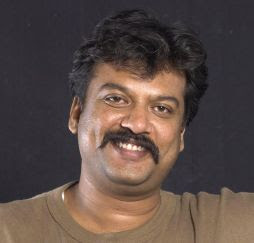


 Posts
Posts


